
The Experience of Being Judged
May 21, 2026
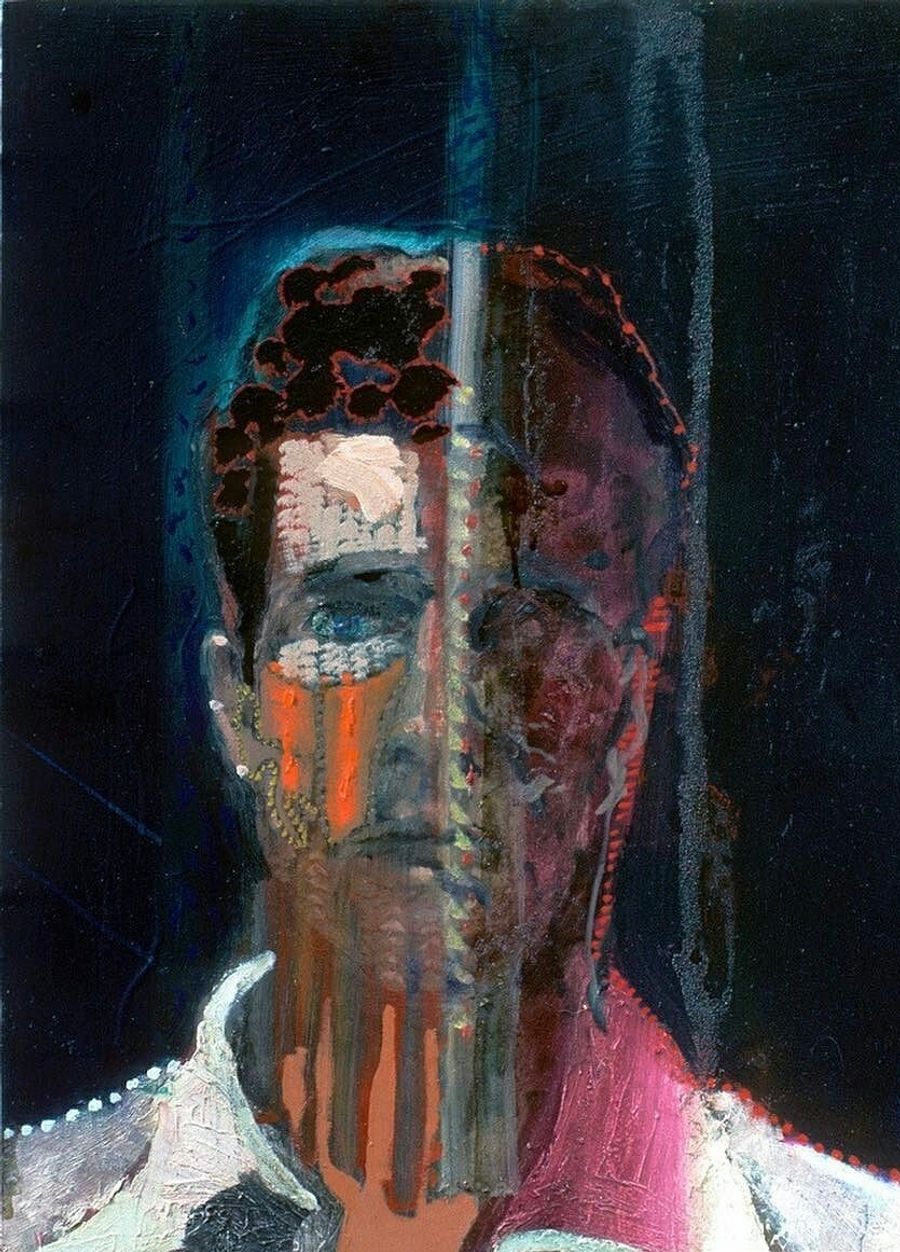
Artwork from the movie Man Without A Face (1993) by Mel Gibson
Judgment is one of the central relational processes through which human vitality becomes constricted. It’s essential to understand how freedom, spontaneity, development, and ways of being in the world become thwarted or narrowed over time. Some might call the resulting suffering “psychopathology.” Yet this language can obscure as much as it reveals. Often, what we describe clinically are the many ways human beings learn to cope with judgment, exposure, criticism, exclusion, and the internal worlds shaped within relational systems. Because we all live within systems of values, beliefs, expectations, traditions, and power, no life goes untouched by judgment.
I‘ve often felt that the mental health field does a disservice both to those seeking help and to the human experiences that inspire our work when it moves too far from lived experience itself. There is a tendency for our work to become overly intellectualized—a pursuit of explanation, categorization, and technique—rather than an embodied, relational, and aesthetic practice grounded in the texture of human experience of life. For this reason, I have tried to write here in a way that remains close to the experience of being judged and largely free of psychological jargon.
In psychotherapy, as in writing, one of the most important questions we can ask is simple: What is this like? Even for me, writing this was a challenging and very therapeutic process of staying close and articulating this experience. Ask Rilke says in Letters To A Young Poet, Letter 4, “when addressing the most delicate and nearly unsayable, words fail even the best.” This is the therapeutic task, the articulation of one’s lived experience of life. That we would begin to expand ourselves, be more enlivened, better know ourselves and our own participation in our lives.
The Experience of Being Judged
To be judged is first of all to become visible and seen in a particular way. Not simply seen, but to be measured. One feels oneself no longer moving freely through the world, but appearing within another person or group's field of evaluation. The body changes almost immediately. Posture stiffens or becomes overmanaged. The stomach feels clenched and hollow, as though it were instantly emptied or twisted. Speech loses its spontaneity. One begins hearing oneself while speaking, watching oneself while living. A feeling that one's inner voice is lost, buried, or silenced. It’s as though the free flow of experience has been instantly damned and the valley below instantly barren. The experience is not merely that someone else has an opinion, but that one’s existence has acquired a kind of external center of gravity.
Ordinarily, experience flows outward toward and in response to things: conversation, work, desires, movements, and other things that open up experience. Under judgment, however, our attention and awareness fold back upon itself. A new type of consciousness is present. The judged person becomes both actor and spectator simultaneously - no longer freely living. A split emerges between the self that acts and the self that is being inspected. One starts inhabiting oneself as an object. Some aspect of oneself is being singled out. The aspect of oneself under judgment consumes the whole of the self in a kind of crushing erasure of all its parts. Like a forest that is only partially consumed by a fire, that consumed part becomes the whole, and the remaining forest becomes forgotten or inaccessible.
This objectification has a peculiar effect on our experience of time. Living in judgment anticipates consequences before they occur. In a single glance, pause, raised eyebrow, an email heading, a missed call, or silence can spark an entire anticipated future. Imagining further judgment, rejection, humiliation, exclusion, or diminishment - a repeating of what's happened. Life begins to be lived from a posture of vigilance and protection. Small gestures take on outsized meaning, as they become felt indications of one’s worth, lovability, or place in a relationship. This is the constriction of our experience of ourselves and of the world.
In this constriction, a contraction of possibility occurs. Under judgment, actions no longer appear equally available. One becomes cautious, selective, and edited. Even the body’s smallest movements acquire significance. How is the smallest thing going to be infinitely reduced and cause further inquisition? Hands feel conspicuous. Eye contact becomes deliberate. Breathing is more manipulated. One is on the lookout for a perceived clue of unacceptability. One may become acutely aware of where to place one’s feet, how loudly to laugh, the words one uses, or how quickly to answer. What is normally transparent and flowing between self and world becomes opaque, hidden, protected, or obscured in a hastened vigilance against imagined future judgments. The lived body, ordinarily a medium through which the world is encountered, taken in, and engaged, becomes itself an object of concern.
At its deepest level, judgment exposes the fundamentally social structure of selfhood - what it means to-be/exist and be in the world. Can I be? How can I be? Is it good for me to be in this way? Am I allowed to be? One discovers that the self is not self-contained. Personality, identity, selfhood, or soul is public. Self-disclosure is always taking place. Identity is vulnerable to the gaze of others because part of one’s sense of self develops relationally. To be judged is painful not merely because others may think poorly of us, but because their judgment threatens to destabilize us into a version of ourselves we do not control. Like a negative version of the saying ‘beauty is in the eye of the beholder.’ In judgment, we feel trapped in this other's version of ourselves and at the mercy of the gaze and internal world by which we’re seen and interpreted. Judgment is the antithesis of what we need to continue growing.
“The individual was deprived of that developmental progression by which he could come increasingly to rely on his own spontaneous, authentic, and noncompliant experience as central in his perception, motivation, and interpretation. This failure has momentous consequences. It renders the individual permanently the hostage of the responses of another for the determination and definition of who he is.” -Bernard Brandchaft in To Free The Spirit From Its Cell (1993), p.225, in Progress in Self Psychology.
In this face and evaluation, the focus becomes fixed and specific, and dialogue collapses. One aspect of the self is isolated and amplified until it appears definitive, while the situational and personal complexity recedes from view. Yet the same valuation and vulnerability doesn’t apply to the judge. One person becomes wholly visible in this one aspect while the other remains hidden behind the authority of interpretation. An asymmetry forms. In this lies the loneliness of being judged, closely connected to the experience of exclusion. One is no longer engaged in the mutual risk of relation, but abandoned and imprisoned to another’s determination. To be judged is therefore not only to be evaluated, but to be left alone and overly reduced within an identity that is an overvaluation of one aspect of oneself that one cannot easily escape, or at all.
Another aspect of being judged is the experience of feeling so misunderstood that it no longer even feels like you that is being seen. As Harry Stack Sullivan described, it can feel like “not-me.” Yet within this “not-me,” something of oneself is still present. Some part of one’s experience has entered the relational field, even if it has become distorted, reduced, or misrecognized. What often follows is a difficult and lonely process of trying to make sense of what happened, disentangling one’s own experience from the meanings others impose. At times, the response one encounters can feel disproportionate to what occurred, leaving one feeling reduced to a fixed interpretation without the opportunity for fuller dialogue, repair, or mutual understanding. In these moments, judgment can become profoundly isolating and can create a profound rupture of shared humanity. One is no longer participating in the shared process through which human beings come to know one another more fully, but instead feels held within a meaning that has already been decided.
The greatest evil and destruction arises when people are unable to feel compassion.-John O’Donohue, Beauty: The Invisible Embrace, p.181
Judgment is not always experienced as overt hostility or carries such huge consequences. It may arrive as a kind of cool British politeness, indifference, amusement, disappointment, subtle distancing, or even praise. Praise can feel like a positive judgment when it fixes one into a role one must continue to perform. In this sense, judgment is tied not only to condemnation but to categorization. A living, changing person becomes reduced to a defined aspect or interpretation: one’s gender, race, ethnicity, orientation, attractiveness, competence, awkwardness, intelligence, discipline, naïveté. People often categorize one another in order to know how to relate, but in doing so, something alive and unfolding can become arrested. At times, we are not seen for who we are, but through the limits, fears, or needs of another person, until their perception begins to feel inescapably definitive.
Judgment also differs depending on power. Being judged by a stranger on the street differs from being judged by a parent, a lover, a therapist, an employer, an audience, or a peer group. The more one’s connectedness, belonging, safety, or self-conception depends upon the other, the more penetrating the judgment becomes. Some judgments glance off the shoulder like ‘water on a ducks back,’ others reorganize or collapse one’s interiority, identity, and perception.
There is often an oscillation between resistance and submission or accommodation. One part of the self insists: they do not define me. Another part compulsively seeks confirmation, trying to read the other’s face for evidence. Another part may want to do whatever it takes to make it stop, be safe, or avoid losing the connection. The mind alternates between defensiveness, self-surveillance, and criticism. Sometimes judgment is internalized so deeply that the external observer is no longer needed. A patient in their 30s once shared that at a neighborhood block party, their mother remarked to a friend that she never had to discipline them - they knew they’d punish themselves. One carries the judge’s gaze inside oneself, preemptively judging oneself before others can. The other’s judgment takes up residence within the self, until one experiences oneself increasingly through borrowed eyes. Beyond their awareness, they are constantly accommodating and held together by this internal tormenting of others.
“In shame we are tyrannized and held hostage by the eyes of others; we belong, not to ourselves, but to them.” -Robert Stolorow, The Shame Family.
For this reason, the experience of shame is closely adjacent to judgment. Shame is not merely the feeling that one has acted wrongly, but the experience of oneself as exposed and objectified beneath the gaze of another. In shame, there is always a face. As Robert Stolorow writes, in shame we feel “held hostage by the eyes of others”; one no longer belongs fully to oneself, but exists as an evaluated object within another’s field of judgment. The self becomes split between the one who lives and the one who is seen. In shame, there is often a wish to disappear—not necessarily because one is physically threatened, but because one’s living in the world of appearing feels contaminated by defectiveness or inadequacy. The painful force of shame lies in its totalizing quality: not I have failed, but I am the failure. Under the judging gaze, all of our being itself feels exposed.
And yet judgment can also disclose freedom. The realization that one is affected by others’ evaluations reveals how deeply human beings desire recognition. We do not merely want to exist. Simply existing doesn’t mean one is living. To live is to exist in a particular way that reflects who we are. It requires intention - and an act of will that springs from within. We want to be seen for some bit of who we are, with all our complexity, and with a sense of belonging. The pain of judgment testifies to the importance of mutual acknowledgment. The magnitude of the pain also indicates how much we care and how we may have possibly forfeited our own freedom to the other. Even rebellion against judgment remains oriented toward protecting ourselves and our freedom. Perhaps the deepest injury of judgment is not simply that it wounds us, but that it interrupts our freedom to keep growing in a particular way.
“Nothing is less relevant to works of art than the judgment of others. Whether positive or negative, they will always reflect some measure of misunderstanding. Things are never as easily grasped and expressed as people assume. Most experiences are unsayable; they become real to us in a space no word has entered.” -Rilke in Letters to a Young Poet, Letter 1
So often in Rilke’s poetry and letters, he addresses ‘nature’ or ‘art’. In my opinion, he’s not referring solely to nature or art, but to who we are and the life that moves within us. In this quote, we see the first bit of counsel he gives to the young Cappus. Much of who we are cannot be fully captured through evaluation, categorization, or interpretation. The moment another person becomes reduced to a fixed meaning, something living and unfinished risks being lost - maybe forever.
Human beings are always more than the worst thing seen in them, more than the identities they exude and are imposed upon them, and more than the judgments they have internalized. To encounter another person humanely is not to fix them in place, but to remain in relationship with their complexity, ambiguity, and movement, so that it might reawaken what’s gone stale and fixed. This is acceptance of what is, and what more might be beneath, behind, or to come. Perhaps this is one of the deepest forms of compassion: resisting the temptation to reduce another person to a one-dimensional interpretation.
Healing from judgment may therefore have less to do with eliminating self-consciousness and more with recovering the freedom to live beyond the internalized gaze of others. Not to disappear from view, but to return to the forest or river that is one’s internalized community of others. To move once again from performance into presence. From self-monitoring to participation. From objectification to vulnerability and relation. And perhaps, in moments of genuine encounter, to discover that one’s existence was never meant to be held captive within the eyes of another.
——
My name is Caleb Dodson. I’m a private psychotherapist practicing in Manhattan, New York, and Washington State, and I’m most passionate about bringing kindness to and excavating a sense of shared humanity to some of life’s most challenging experiences, in the service of a fuller life.